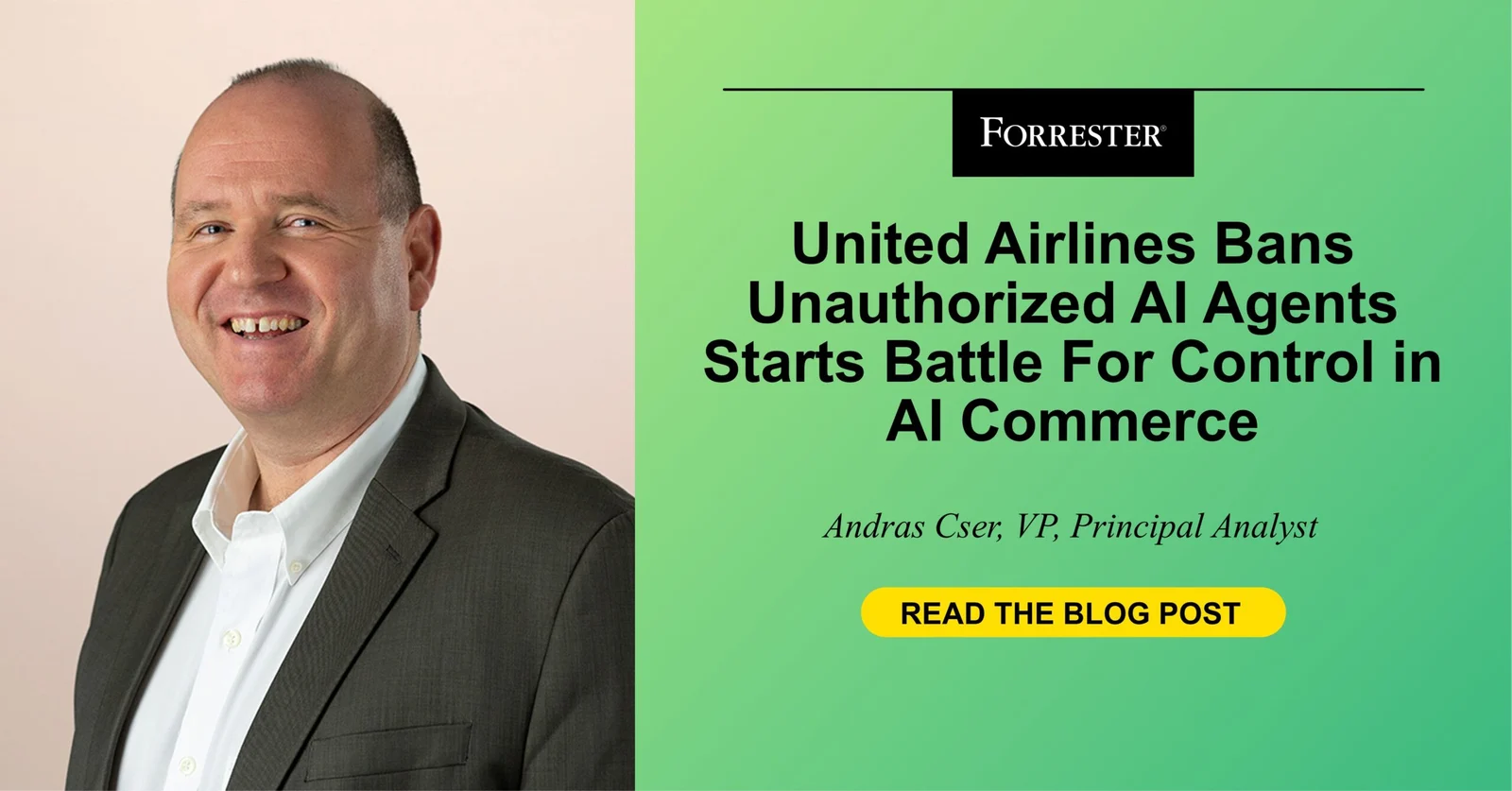
United Airlines now restricts all unauthorized AI agents on its site from making material changes to reservations and purchased tickets, according to a Forrester blog post citing United's announcement. Under the policy, a third-party AI agent, bot, browser extension or browser feature that searches, books, buys, manages or collects information on United.com or the United app without United's permission is unauthorized. Forrester reports that United does not yet work with any AI agent providers for authorized access.
United said in its communication that "this data helps us meet regulatory requirements while also enabling us to deliver personalized experiences and improvements to our products and services." Forrester notes that Amazon, Booking.com, eBay, JPMorgan Chase and Target also have varying levels of restrictions on AI agents.
Forrester lists reasons companies restrict agents: owning the customer experience, avoiding becoming an AI middleman, gaps in identity and fraud tooling, and exposure to fines if an agent causes a loss of personal data. It says AI agents have been hacking e-commerce sites at $25 per site, and that many B2C organizations will likely limit third-party agents until liability schemes and mature verification tools emerge. The analyst firm also cautions that blocking all agent access long-term may be counterproductive.
Forrester recommends that B2C sites allow only well-known, verified agent providers such as Anthropic, Meta and OpenAI, require short-term token-based access with explicit human step-up authentication, take extra care with high-value transactions, and audit all agent actions in detail.